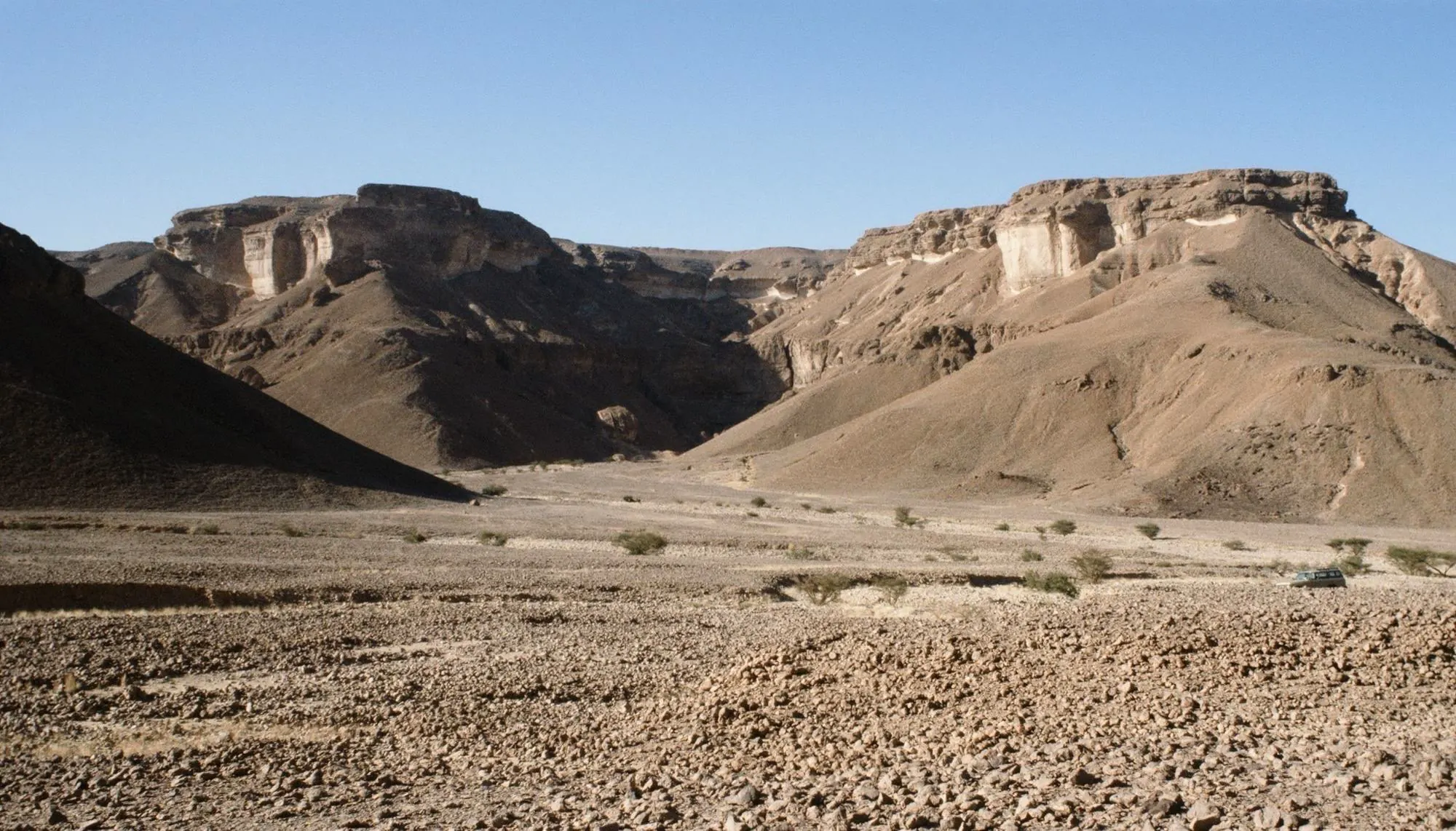
Our Earth reference for a future Mars honey.
Hadramout, Earth’s Mars, brings together monumental desert cliffs, dry valleys, exposed rock and living beekeeping traditions. That visual resemblance makes it SPACEBEE’s chosen origin for the “Mars twin” honey story: a jar of Rare earth’s Mars Hadramout honey to compare with honey from a future protected habitat on Mars, if production becomes possible.
The cliffs and dry channels inspire the comparison. Honey itself depends on flowering plants, bees and habitat conditions, so a future Mars harvest could have a different character. Like other Earth landscapes used to explore Mars, this valley offers a partial resemblance while retaining Earth’s atmosphere, gravity and living ecology. Explore NASA’s Earth analogues →
Prized honey. Limited natural forage.
Hadramout, Earth’s Mars, is known for prized Sidr honey. Sidr trees in the region’s dry landscapes can be scattered and under pressure from drought; flowering seasons and rainfall govern the nectar available to bees. These limits make harvests precious and variable. FAO describes Yemen’s Sidr as one of the world’s most valuable honey varieties: a desert harvest shaped by the trees and flowers that sustain it.
FAO on Yemeni Sidr honey → · Yemen’s forest and tree report →