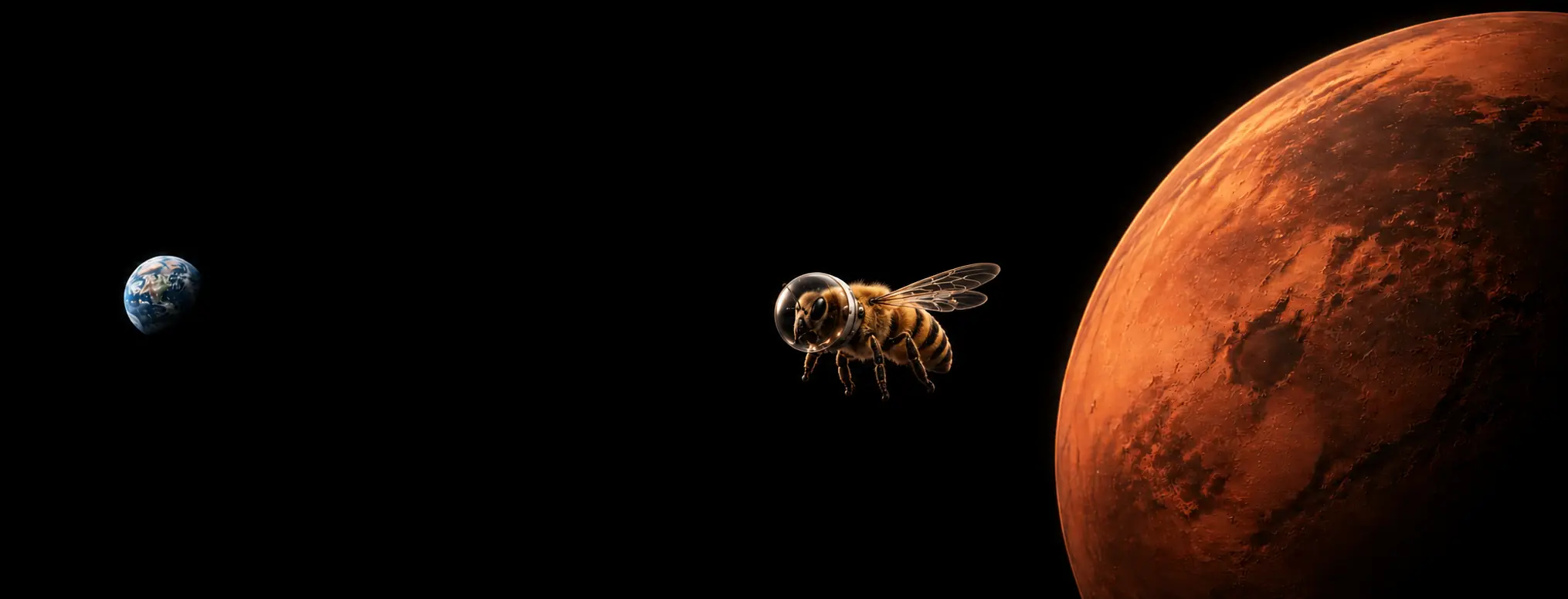
The farmer science fiction forgot
The iconic Martian worker is human, humanoid or robotic. In a mature habitat, some of the most important labor could be performed by organisms too small to wear a mission patch.
Pollinators connect flowers, food and seed production. Decomposers process waste. Microbes cycle nutrients. The future farm may be less like a factory and more like a deliberately assembled ecology.
Six legs do not mean one solution
Bees are not automatically the right pollinator for every crop or mission phase. Containment, colony welfare, allergens and ecological risk matter. Some crops need no insect at all.
The serious idea behind the headline is functional diversity: a settlement that depends on one machine or one crop may be less resilient than one with overlapping biological and mechanical systems.
From character to infrastructure
Science fiction often turns nonhuman life into a character. SPACEBEE asks a different question: what if small organisms become infrastructure?
That possibility remains unproven. It is also large enough to deserve experiments before humanity needs the answer.
Sources and further reading
NASA space crop research ↗FAO pollination resources ↗How this article was created
The SPACEBEE Research Desk framed the question, reviewed public primary sources, stated the strongest counterargument and separated evidence from hypothesis. AI assisted drafting may be used for structure and language. Claims are manually reviewed before publication. No unnamed expert endorsement is implied.
Read our editorial, corrections and scientific review policy →