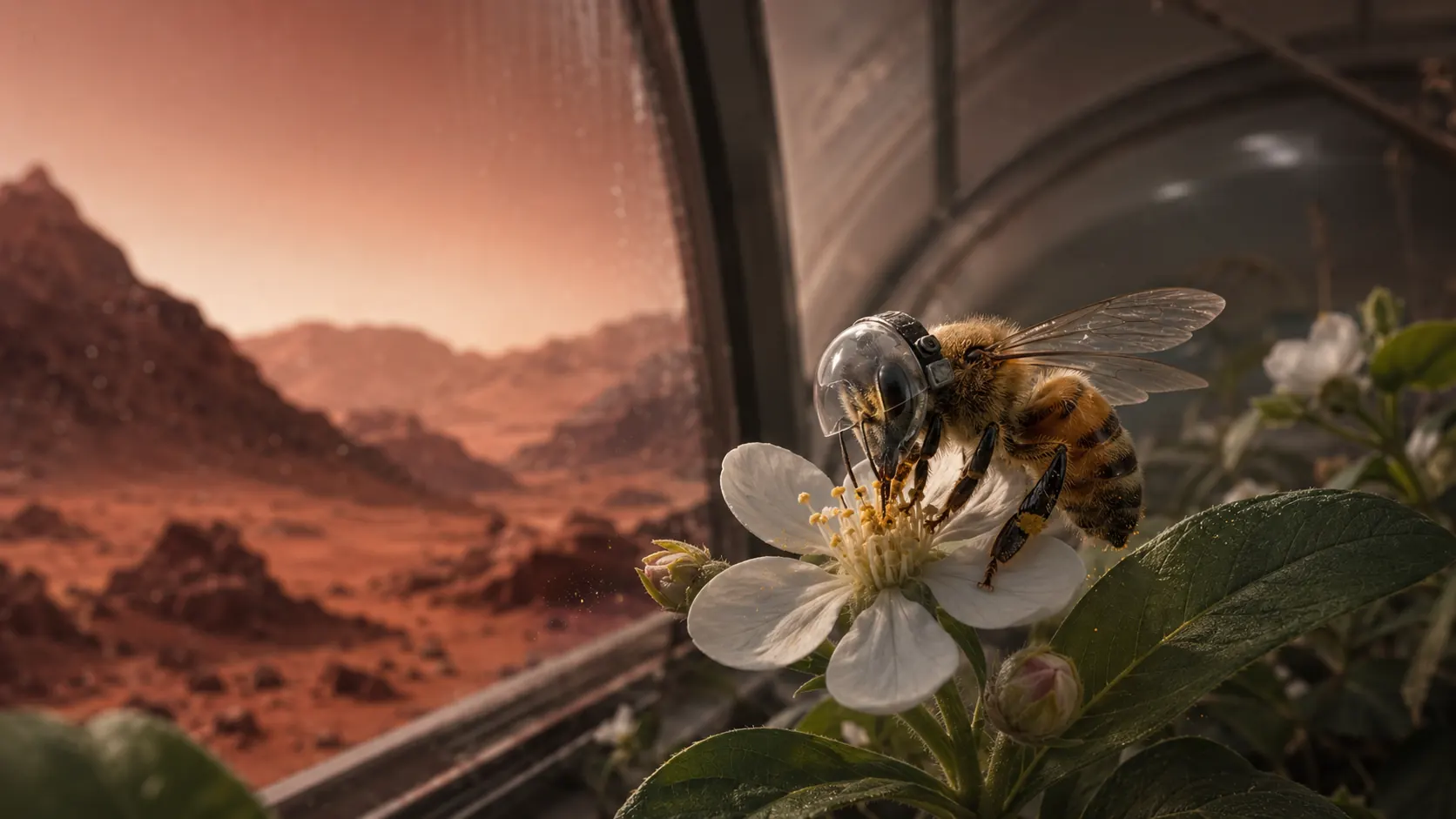
The dome borrows an Earth that is not there
A cinematic greenhouse usually receives sunlight, contains familiar soil and behaves like a terrestrial room. A Mars habitat must manage pressure, radiation, temperature, water recovery, nutrients, atmosphere and microbial control.
The transparent dome communicates hope in one second. It hides the machine required to keep that hope alive.
Food is shown as inventory
Stories often show harvests but skip reproduction. A crop can produce fruit without producing the next generation of viable seed. Pollination, genetics and seed storage become strategic infrastructure in a long settlement.
The gap is useful. Science fiction makes the future emotionally visible; engineering reveals the price of making it repeatable.
The correction makes the story better
A real Mars farm is full of conflict: a humidity increase that helps plants may threaten equipment; a pollinator may improve yield while complicating containment; a crop may be efficient but psychologically monotonous.
Biology is not decoration. It is dramatic, unpredictable infrastructure.
Sources and further reading
NASA growing plants in space ↗NASA Mars facts ↗How this article was created
The SPACEBEE Research Desk framed the question, reviewed public primary sources, stated the strongest counterargument and separated evidence from hypothesis. AI assisted drafting may be used for structure and language. Claims are manually reviewed before publication. No unnamed expert endorsement is implied.
Read our editorial, corrections and scientific review policy →