The landing receives the applause
Rockets produce a visible event: ignition, flight, landing. Biological continuity is slower. Crops must grow repeatedly. Water and nutrients must cycle. Failures can accumulate quietly.
A settlement can survive a mission and still fail to sustain itself.
A city is not alive because people occupy it
A permanent world needs repair, reproduction and renewal. Machines must be maintained. Living systems must reproduce without destabilizing the habitat around them.
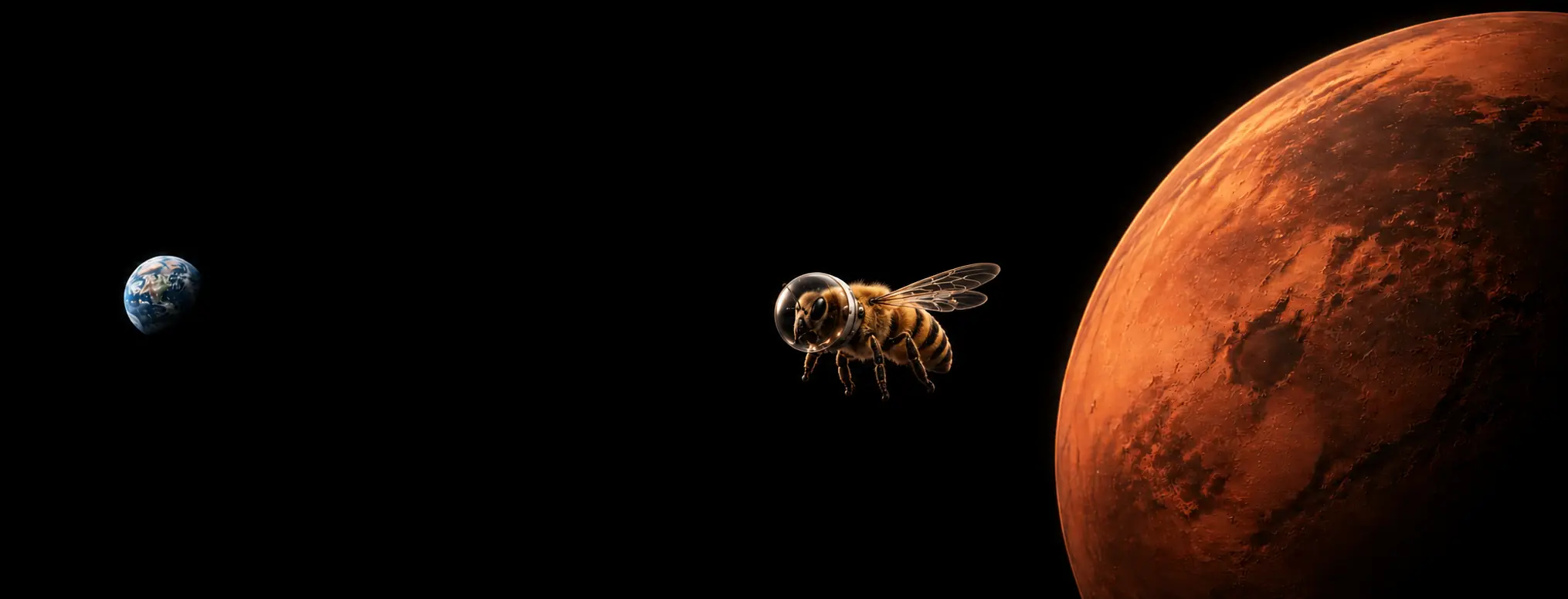
SPACEBEE uses pollination and honey to make that hidden challenge public. The jar is symbolic; the system is the mission.
Sources and further reading
NASA Moon to Mars architecture ↗NASA biological and physical sciences ↗How this article was created
The SPACEBEE Research Desk framed the question, reviewed public primary sources, stated the strongest counterargument and separated evidence from hypothesis. AI assisted drafting may be used for structure and language. Claims are manually reviewed before publication. No unnamed expert endorsement is implied.
Read our editorial, corrections and scientific review policy →