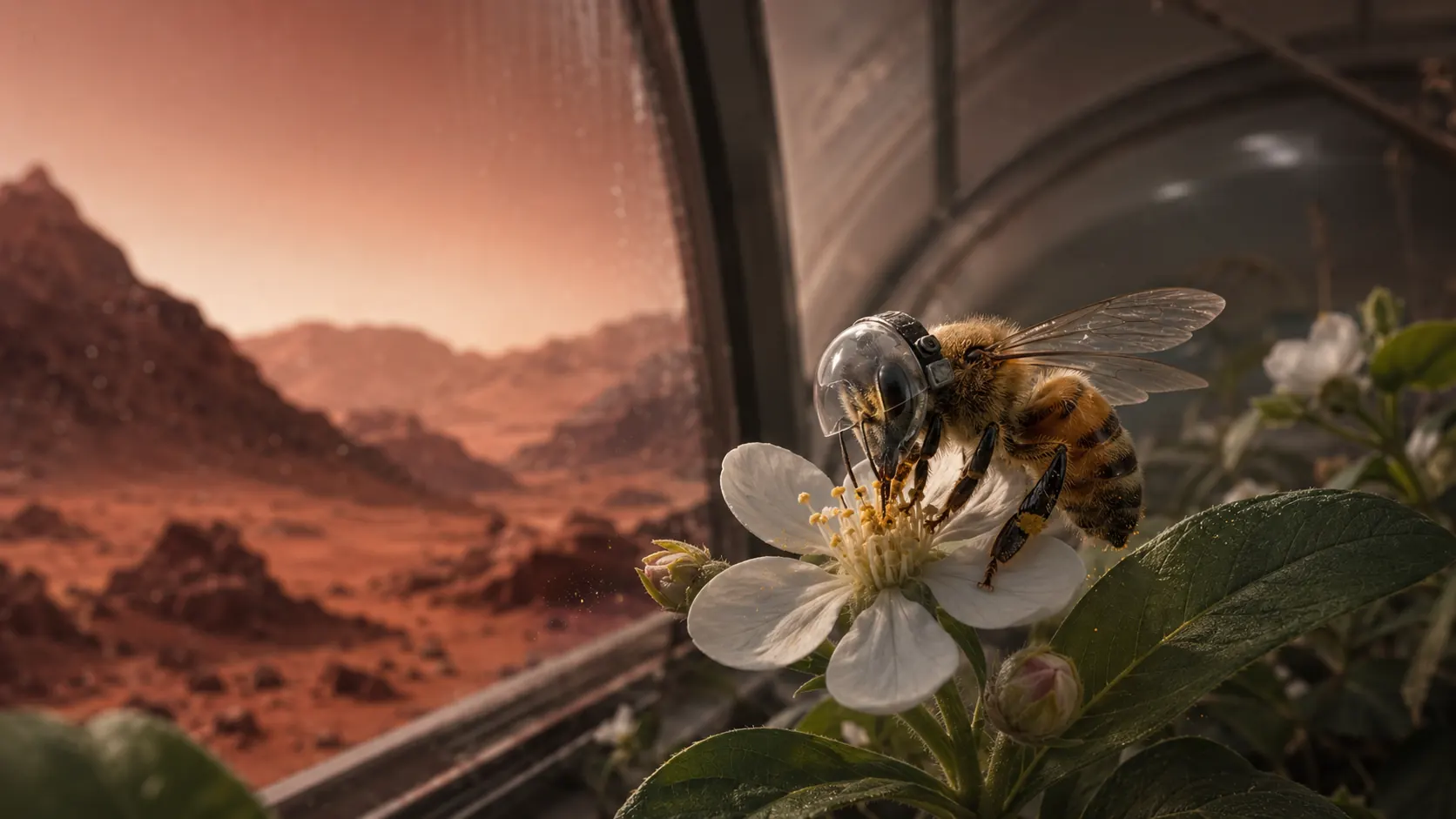
The greenhouse illusion
On Earth, a greenhouse borrows a planet. It borrows air, gravity, water systems, microbial life and an atmosphere that blocks much radiation. On Mars, the habitat must replace or manage nearly all of those services.
A transparent dome is therefore an image, not a complete plan. The real system may be buried, shielded and lit partly or entirely by engineered lighting.
Life creates feedback
Plants release water vapor and exchange gases. Microbes transform nutrients. Pollinators add heat, respiration and movement. Every living component changes the environment it depends on.
A Mars greenhouse is closer to a spacecraft whose moving parts are alive. Its value is food, but also psychological variety, biological learning and eventually the ability to grow one generation of seeds after another.
Sources and further reading
NASA growing plants in space ↗NASA Mars facts ↗How this article was created
The SPACEBEE Research Desk framed the question, reviewed public primary sources, stated the strongest counterargument and separated evidence from hypothesis. AI assisted drafting may be used for structure and language. Claims are manually reviewed before publication. No unnamed expert endorsement is implied.
Read our editorial, corrections and scientific review policy →