Machines win the first round
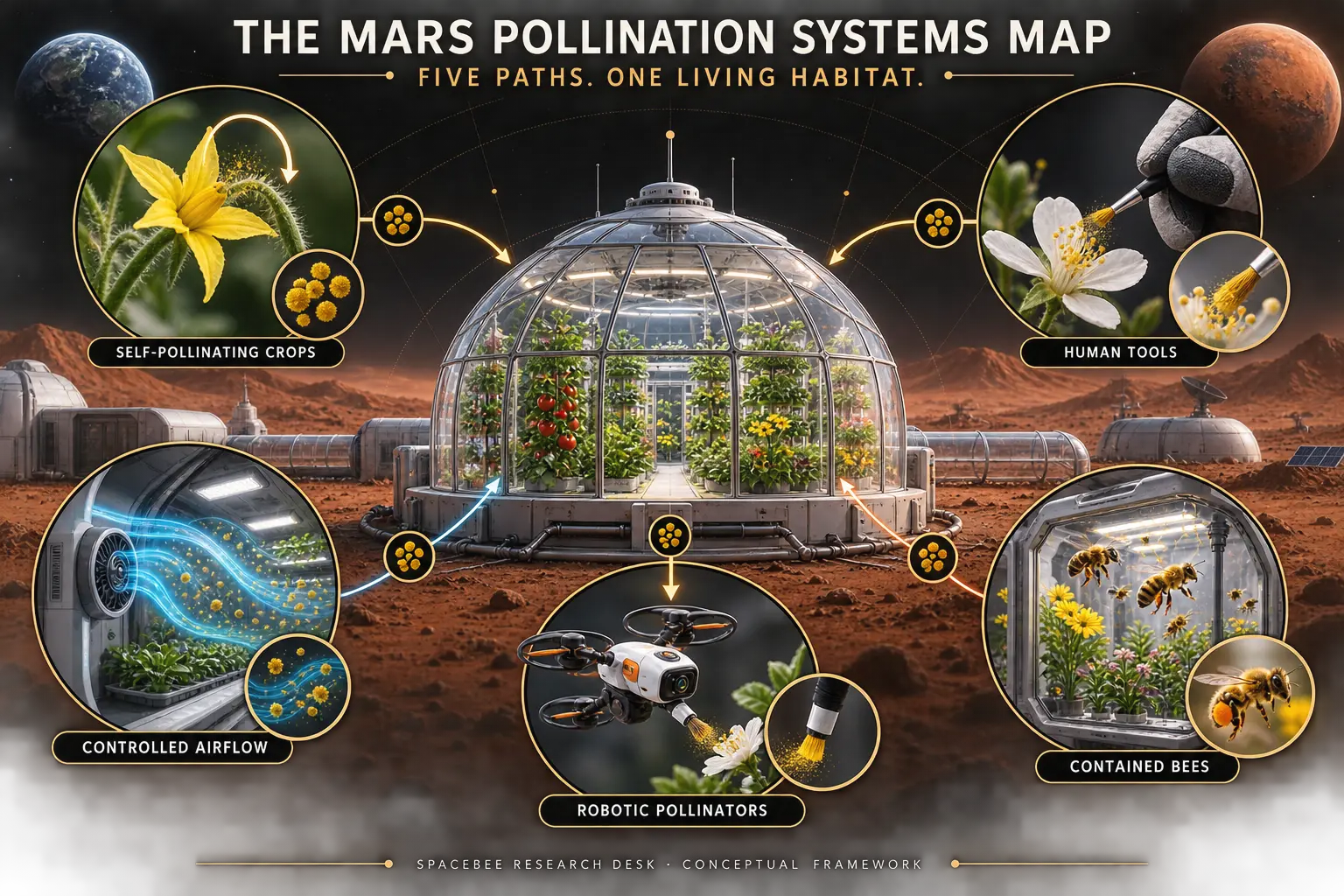
Robots can be sterilized, scheduled and repaired. They do not require brood care or forage. In a small habitat where risk is high, those qualities matter.
The case for biological pollinators grows only when a settlement needs greater diversity, autonomous response and a more complete ecological system.
The false choice
Space systems use redundancy. A mature habitat could use crops that pollinate themselves, human tools, airflow, robotic devices and selected insects. Different crops and mission phases may demand different methods.
SPACEBEE’s work should therefore be judged as research into one layer of future biological infrastructure. It is not a campaign to ban robotic pollination.
Sources and further reading
NASA space crop research ↗How this article was created
The SPACEBEE Research Desk framed the question, reviewed public primary sources, stated the strongest counterargument and separated evidence from hypothesis. AI assisted drafting may be used for structure and language. Claims are manually reviewed before publication. No unnamed expert endorsement is implied.
Read our editorial, corrections and scientific review policy →