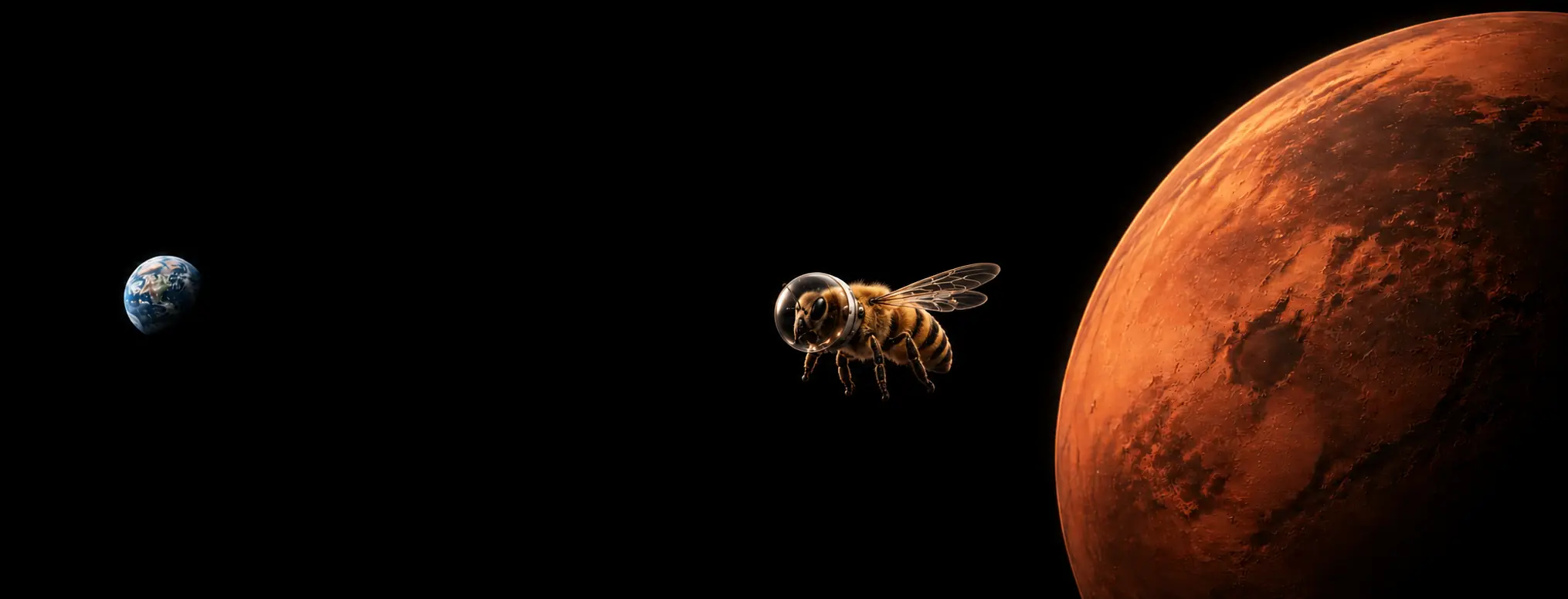
Honey is not cargo. It is a chain of events.
A sealed jar can travel to space. Making new honey there is different. Plants must grow and flower. Bees must locate those flowers, collect nectar, return to the colony, communicate and reduce the nectar’s water content.
Every link adds a failure mode. That is why a small amount of locally produced honey would mean much more scientifically than its weight suggests.
Gravity changes the map
Bees use multiple sensory signals, including vision and orientation related to gravity. Altered gravity could change comb construction, movement and communication. A future experiment would need observation, ethical safeguards and a design that separates gravity effects from lighting, vibration and confinement.
SPACEBEE treats this as an unanswered research question, not a solved product claim.
The impossible output
Honey is emotionally familiar and technically demanding. It translates an abstract habitat into something any person can understand: a flower lived, a pollinator worked and a colony processed the result.
That is why SPACEBEE chose honey as its long term proof. It was chosen not because it is easy, but because it is difficult to fake as proof that living systems worked together.
Sources and further reading
NASA space biology overview ↗FAO pollination resources ↗How this article was created
The SPACEBEE Research Desk framed the question, reviewed public primary sources, stated the strongest counterargument and separated evidence from hypothesis. AI assisted drafting may be used for structure and language. Claims are manually reviewed before publication. No unnamed expert endorsement is implied.
Read our editorial, corrections and scientific review policy →