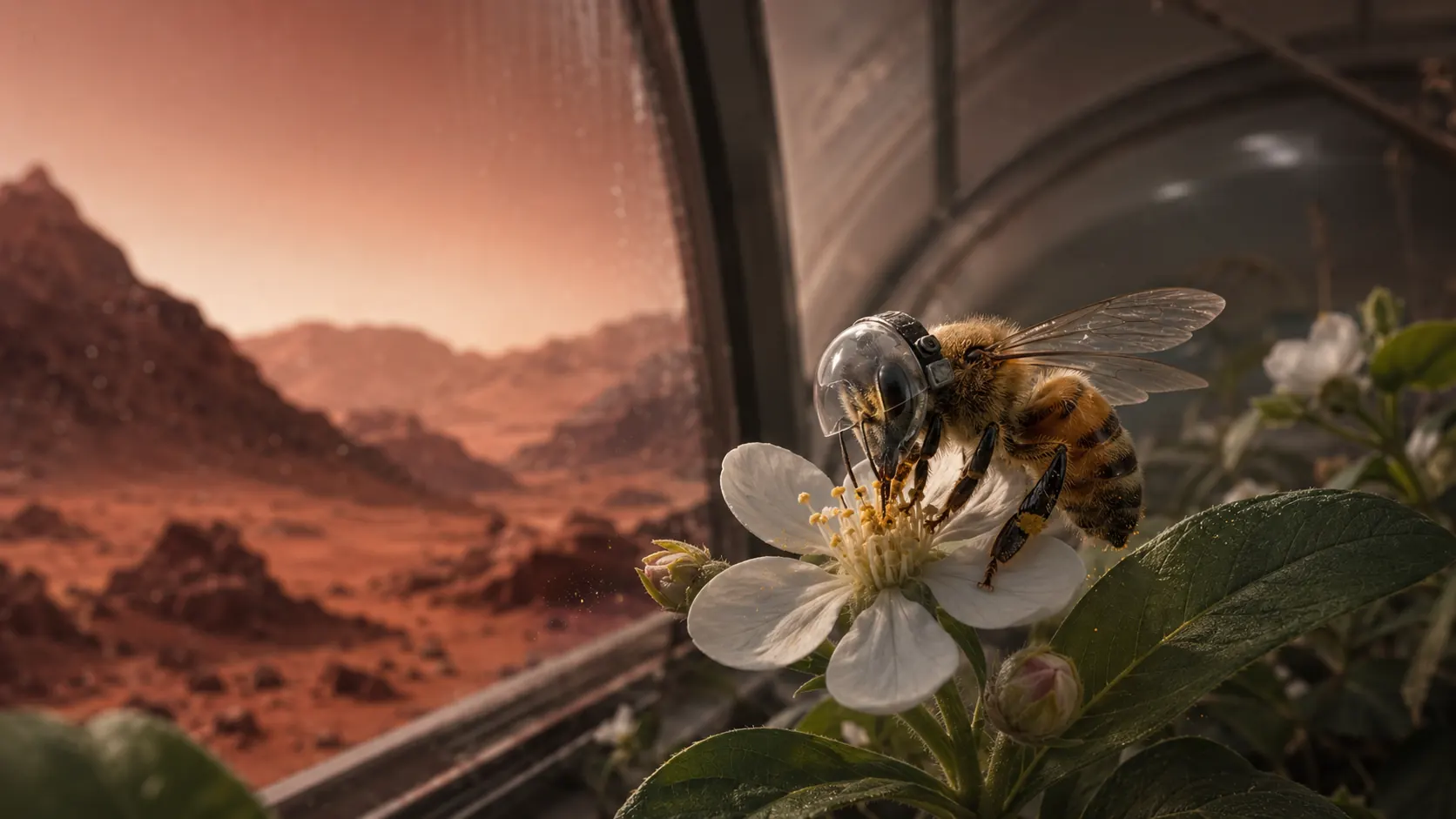
The short answer is no
Mars has a thin atmosphere dominated by carbon dioxide, intense cold, high radiation exposure and no breathable outdoor environment. An unprotected terrestrial bee would not fly through a Martian valley. SPACEBEE does not claim otherwise.
The useful question is whether bees could live inside a protected biological habitat built on Mars. That question resembles every serious discussion about future human settlement: survival depends on engineered shelter.
The habitat must solve five problems
A habitat for bees and plants would need stable pressure and atmosphere, a safe temperature range, reliable light cycles, liquid water and continuous flowering nutrition. It would also need orientation cues and containment rules that protect both the colony and the wider habitat.
None of these systems can be treated independently. More light changes heat. More plants change humidity and gas exchange. A larger colony changes food demand. The experiment is a coupled biological system, not a jar placed beside a window.
Why attempt something this difficult?
Because difficulty produces information. A colony is a living sensor network. Changes in navigation, brood development, foraging or food storage can reveal failures that a single crop test may miss.
SPACEBEE’s goal is not to place Earth animals into danger for spectacle. The goal is to design responsible Earth tests that reveal where pollinators belong in resilient controlled agriculture on Mars.
Sources and further reading
NASA Mars facts ↗NASA controlled environment plant research ↗How this article was created
The SPACEBEE Research Desk framed the question, reviewed public primary sources, stated the strongest counterargument and separated evidence from hypothesis. AI assisted drafting may be used for structure and language. Claims are manually reviewed before publication. No unnamed expert endorsement is implied.
Read our editorial, corrections and scientific review policy →